Data Centers & Environmental Justice

What Are Data Centers and What is the Issue?
Data centers are facilities that house technology infrastructure used for digital storage, communication, and to process computing demands for AI programs such as ChatGPT. These facilities are owned by companies like xAI, Meta, Amazon, Google, and Microsoft, who are heavily invested in the rollout of new data centers, many of which take up over a million square feet.
There are currently over 4,000 data centers in the United States with an additional 2,788 under construction or planned, with high amounts located near communities of color and low-income. These centers are natural resource and land-intensive: according to the International Energy Agency, “a large data center can consume as much electricity as 100,000 households,” with the largest under development using 20 times more than this figure. A typical large data center also requires up to 5 million gallons of water a day. Data centers are being built all over the country, threatening the health and safety of communities, while adding skyrocketing costs.
There are currently over 4,000 data centers in the United States with an additional 2,788 under construction or planned, with high amounts located near communities of color and low-income. These centers are natural resource and land-intensive: according to the International Energy Agency, “a large data center can consume as much electricity as 100,000 households,” with the largest under development using 20 times more than this figure. A typical large data center also requires up to 5 million gallons of water a day. Data centers are being built all over the country, threatening the health and safety of communities, while adding skyrocketing costs.
LEARNING & ADVOCACY SERIES
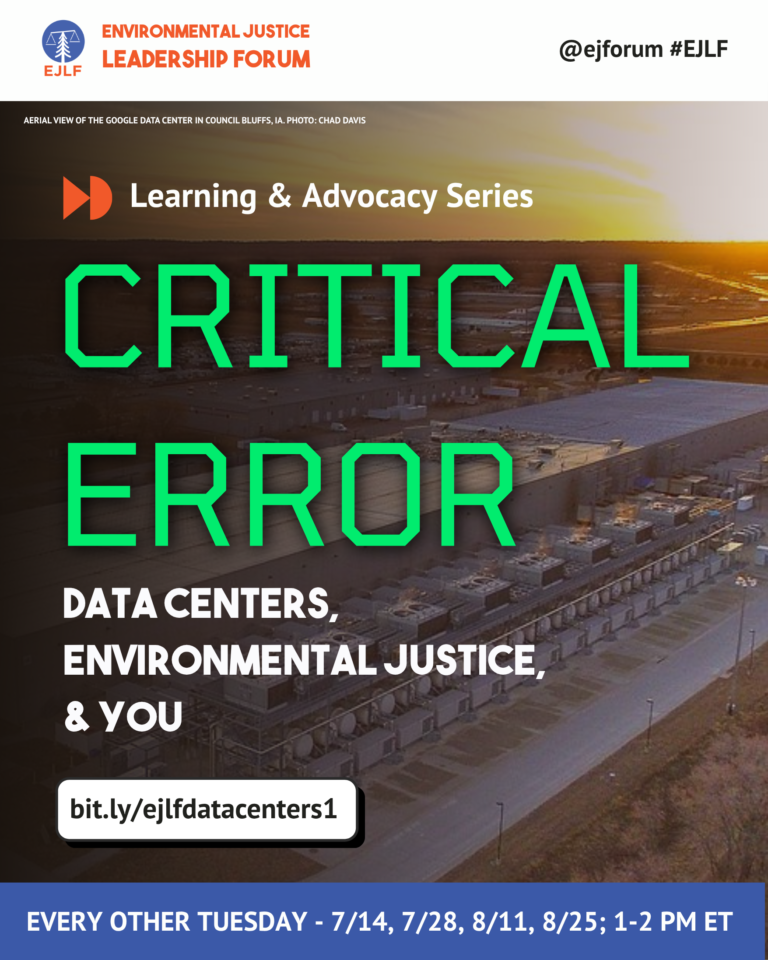
Critical Error: Data Centers, Environmental Justice, and You
The Environmental Justice Leadership Forum hosted a free biweekly learning and advocacy series on the environmental, social, and economic justice impacts of large-scale data centers. Beyond the well-known concerns around water consumption and fossil fuel expansion, data centers are driving up energy costs, generating dangerous noise and air pollution, and deepening the burdens already facing communities of color and lower-income neighborhoods — often without community knowledge or input.
Watch and share the webinars with policy experts from Southern Environmental Law Center, Data for Progress, Quiet Communities, and Good Jobs First, alongside our EJLF members including Sowing Justice, Kentuckians for the Commonwealth, and North Carolina Environmental Justice Network, to gain valuable insights into their experiences. Together, we will strengthen your understanding of how data centers can impact your community and what you can do about it.
Speakers:
- July 14th – Transparency & Non-Disclosure Agreements: Amanda Garcia, Southern Environmental Law Center & Marquita Bradshaw, Sowing Justice
- July 28th – Impacts of Noise Pollution: Jamie Banks, Quiet Communities & Sustain South Jersey
- August 11th – Utility Costs & Grid Reliability: Grace Adcox, Data for Progress & Em Coakley, Kentuckians for the Commonwealth
- August 25th – Economic Impacts and Jobs: Kasia Tarczynska, Good Jobs First, and Dr. Rania Masri, North Carolina Environmental Justice Network
How Do Data Centers Impact Environmental Justice Communities?
The burdens data centers place on communities are numerous. From onsite power plants and increased demand from local sources, these centers are responsible for increased greenhouse gases emissions and harmful pollutants, while creating water scarcity and contamination. Data centers are also tripling demand for gas-fired power in the U.S. over the past two years, adding even more polluting facilities to vulnerable neighborhoods. This fuels the devastation of extreme weather and disasters from the climate crisis. They create a constant hum of noise pollution and are contributing to higher utility bills for ratepayers from increased electricity demand.
Data center developers and operators are also awarded economic incentives that result in lost revenue for communities that could support local education, public transit, and infrastructure while producing few local jobs. Despite these known impacts, data centers are often built without the consent of the communities they’re housed in, with many developers signing NDAs with local governments that prevent external input into their construction and operation.
Data center developers and operators are also awarded economic incentives that result in lost revenue for communities that could support local education, public transit, and infrastructure while producing few local jobs. Despite these known impacts, data centers are often built without the consent of the communities they’re housed in, with many developers signing NDAs with local governments that prevent external input into their construction and operation.
What is the EJLF Doing About It?
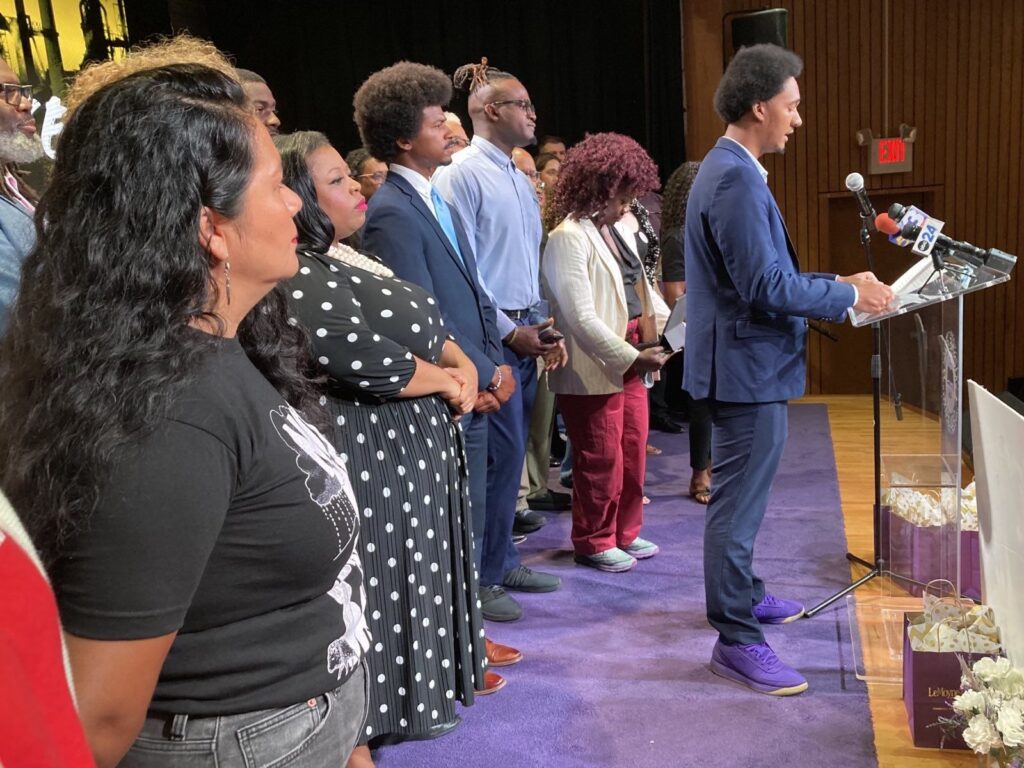
EJLF members are working at the local and state levels to educate policymakers on the harmful impacts of data centers and positive investments they want in their communities. We are organizing, sharing resources, stories, and strategies, and growing the movement to protect our communities from data centers’ dangerous effects.
Partners & Supporters:
Partners & Supporters:
- The Resilient Communities Legislative Exchange with the National Caucus of Environmental Legislators
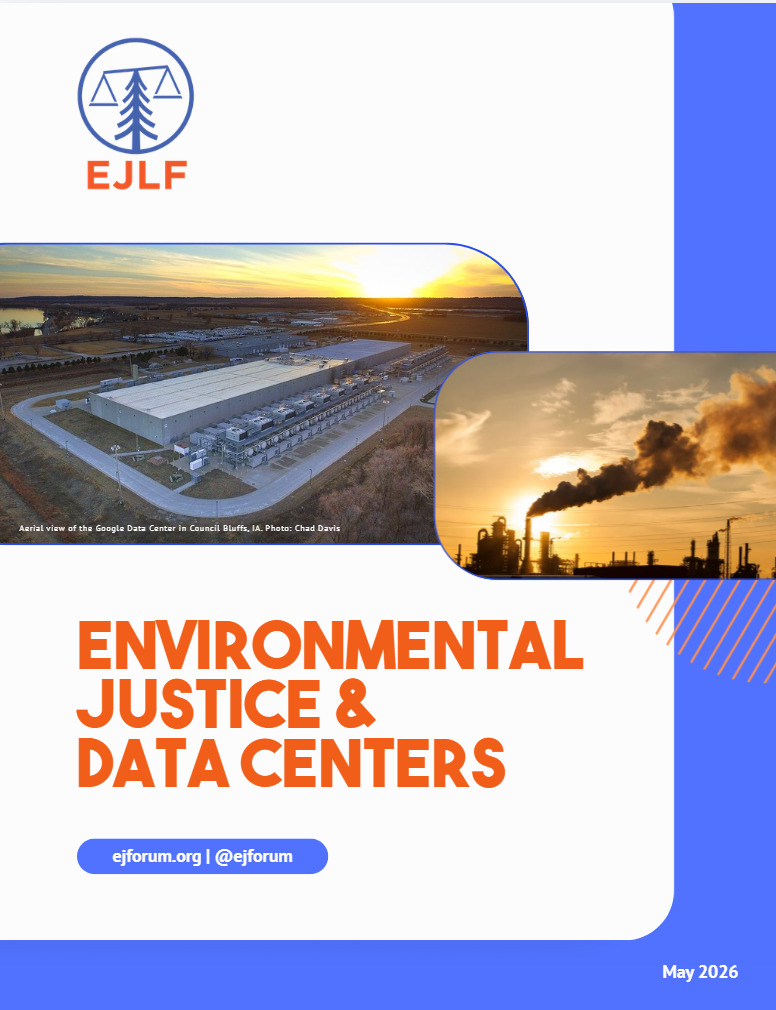
data centers & environmental justice issue brief
EJLF members have supported the creation of an issue brief outlining key insights, concerns, and voices on the development of data centers across the U.S. Data centers are facilities that store digital infrastructure such as server systems, networking equipment, and power generators. Rapid expansion of these facilities have caused concerns surrounding their environmental, economic, and public health impacts. In response, multiple states and local municipalities are enacting regulations on their development and usage. Legislators can enact regulations that focus on these concerns, ensuring that communities are protected and receive benefits from having these centers in their backyards.
read & shareresources
- Extracting Profits from the Public: How Utility Ratepayers Are Paying for Big Tech’s Power
- NAACP - Did You Know? AI and Data Centers
- The AI Bubble and the Sacrifice Zone - Alternatives for Community and Environment
- Commonwealth Beacon: The dark side of AI: Climate chaos, pollution, and injustice - Alternatives for Community and Environment
- Boston 25 News: Raised concerns as Mass. prepares for first hyperscale data center - Alternatives for Community and Environment
- Listen to Kansas Citians before raising our utility rates for data centers | Opinion - Rise4EJ
- Megawatts Over People: The Real Cost of Artificial Intelligence — and Why It Is Not Inevitable
- USA Data Centers - 4032 Facilities from 1807 Operators
- Data Centers and Water Consumption | EESI
- Wisconsin Green Muslims and Michigan Green Muslims Data Centers Report
- Resources on Understanding Data Centers and Their Environmental Impacts - NCEJN
Featured
Organizations
Explore our spotlight on inspiring organizations dedicated to addressing and centering environmental justice in the effort to achieve a just transition and fight for the right to clean air, water, and land. Learn about our impactful work and innovative solutions driving progress for equitable policies and connect with your local organizations!